
I find the NFL Scouting Combine to be a test of expectations. Fast players should look fast. Slow players should look slow. When the results don’t match the expectations, that is when more work must be done.
Below you’ll find my expectations for this position group this week in Indianapolis. Who do I expect to stand out? Who does this week mean the most for? What are the drills I prioritize most? Here are my thoughts on all of that and more!
Full Scouting Reports on all of these players can be found in the DieHard Draft Guide!
Workout Warriors
These are the players I expect to perform best in the athletic testing portion of the workout.
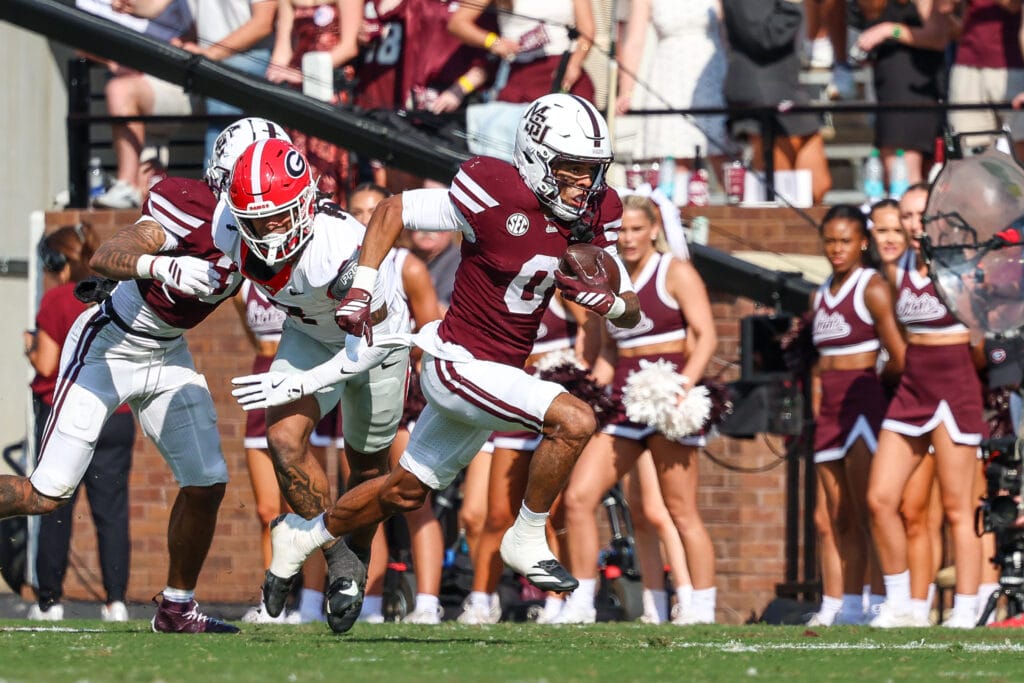
Brenen Thompson (Mississippi State)
A former state champion track star in the state of Texas, Thompson is undersized but this kid can FLY. MSU utilized that speed by feeding him the football this year, allowing him to finish second in the SEC in yards. Watching him, it honestly could have been even more had he had league-average quarterback play. He should be the fastest man in Indianapolis this week.
Zachariah Branch (Georgia)
Branch brings the juice. The son of a Hall of Fame wideout (Cliff), Zachariah is explosive both with and without the ball. He excelled as a horizontal stretch player and when they got him the rock. If he saw a crease he hit that hole HARD. A good return man thanks to that explosiveness, he brings value on special teams. I don’t see the round-one price tag some others seem to, but Branch can fly. He should look good here.
Chris Brazzell II (Tennessee)
Sometimes it can be as simple as ‘that guy is really big and moves really fast.’ That’s the case with Brazzell, who has impressive straight-line speed for a tall wideout but also exhibits the ability to sink his hips and get in and out of breaks as well. There are other aspects of his profile that are questionable or concerning as he transitions to the league, but his athleticism is not that. This should be a good week for the junior declare.
Barion Brown (LSU)
A five-star high school recruit who won the state title in Louisiana in both the 100- and 200-meter for two straight years, this kid has scorching speed. The most polished receiver? No. But he can burn. He should excel in this event.
Chris Hilton (LSU)
Another LSU speedster, Hilton was also a track standout in high school as one of the top high-jumpers in the nation and a three-time state champ in that even while also winning the 400-meter in both the outdoor and indoor seasons. The son of two track athletes, he’s built for moments like this.
Deion Burks (Oklahoma)
A Purdue transfer, Burks comes in compact packaging but he has speed to burn and has lightning-quick lateral agility as well. In college, that explosiveness allowed him to be an effective stretch player both vertically and horizontally in the offense. He looks like a guy who should be in the 4.3s in the 40-yard dash when you watch him on tape.
Bryce Lance (North Dakota State)
Trey Lance’s younger brother is nothing if not explosive. Listed 6-foot-3 and nearly 210 pounds, he rolls out of his stance and gets to top speed quickly outside the numbers as a vertical deep threat. He’s not just a straight-line speed guy, however, because (like Brazzell) he can sink his hips and get in and out of cuts just as well. I’m not sure why there has not been more buzz about him, but I expect that to change after Saturday.
Omar Cooper Jr. (Indiana)
Just a one-year starter for the Hoosiers, the hometown Indianapolis native is a dense athlete with the suddenness and explosiveness to impact all three levels on the field. He’s got real juice and, as a former track athlete in high school, has the pedigree to excel in an environment like this one. I think more people will be buzzing about him after this weekend.
The Drill To Watch
I am a big proponent of studying the position work at this event. That is my focus when I’m inside Lucas Oil Stadium – not the athletic tests! Here’s the drill I weigh the heaviest and who I expect to shine when it’s that time of the night.
One of my favorite drills to watch over the course of the entire week is the Gauntlet Drill with the receivers. The prospect starts on one sideline and runs across the width of the field, catching footballs coming at him from both his left and his right in rapid-fire fashion before he reaches the other side, where he pulls in his final reception and sprints to the goal line. Some of the things you can notice when watching this drill:
- How cleanly the receiver catches the ball – look the pass in, secure it, and toss it aside while looking for the next throw
- Balance and body control while staying at near-top speed
- Battling through adversity – if they have a drop or a bad rep, do they have a short memory and finish the drill strong?
Here are the players who have a chance to shine in these drills.
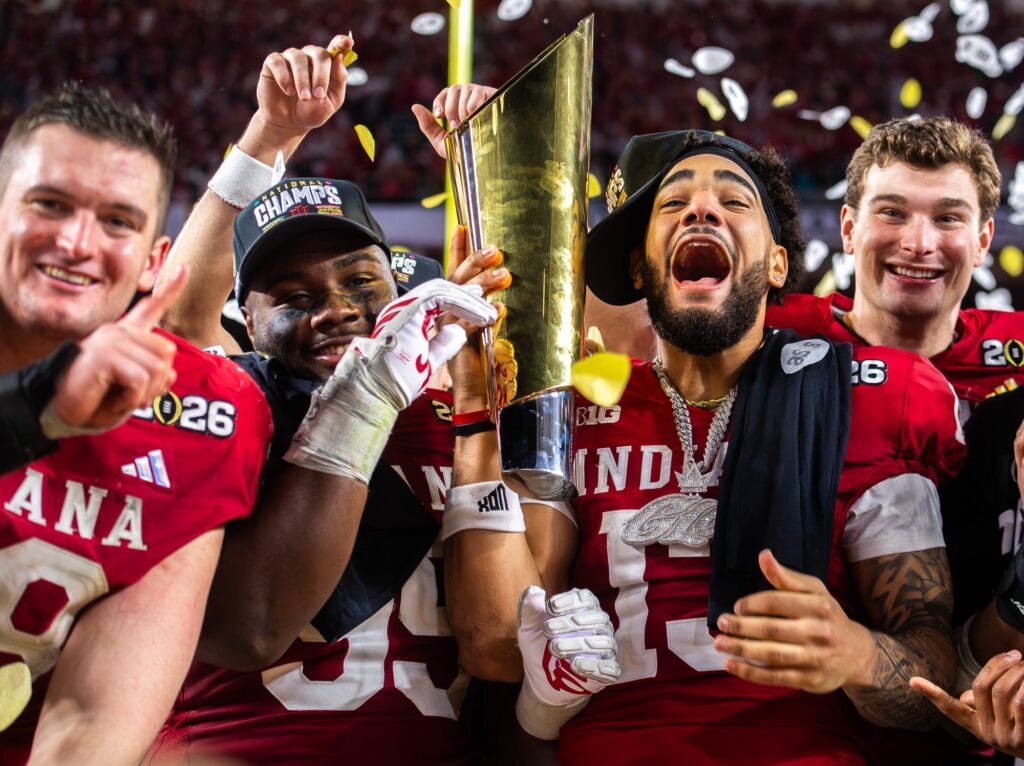
Elijah Sarratt (Indiana)
Sarratt is not the athlete his teammate Cooper is. That said, he makes up for it with reliable hands, strength and competitiveness. I have questions about his ability to separate in the NFL, but in a drill like this? He should look good.
Germie Bernard (Alabama)
I’m not sure that Bernard has one elite trait, but his hands and body control at the catch point are close. He’s a bit of a linear athlete, but in a drill like this that won’t hurt him. I think he’s tailor-made to excel in the gauntlet. I still see him as more of an ideal backup in the league as opposed to a sure-fire starter.
Kendrick Law (Kentucky)
Law has one of those ‘wide receiver who is built like a running back’ frames, and his usage fit that description, as he was oft-targeted at, behind, or close to the line of scrimmage and allowed to create with the ball in his hands. He’s forceful through contact and rarely puts the ball on the ground. A drill like this is right in his wheelhouse.
Trust The Tape
These are the players whom I don’t expect to test off the charts athletically, but don’t panic! The tape shows a prospect who is a better football player than he is an athlete. With that in mind, don’t drop him down the board with a subpar workout!
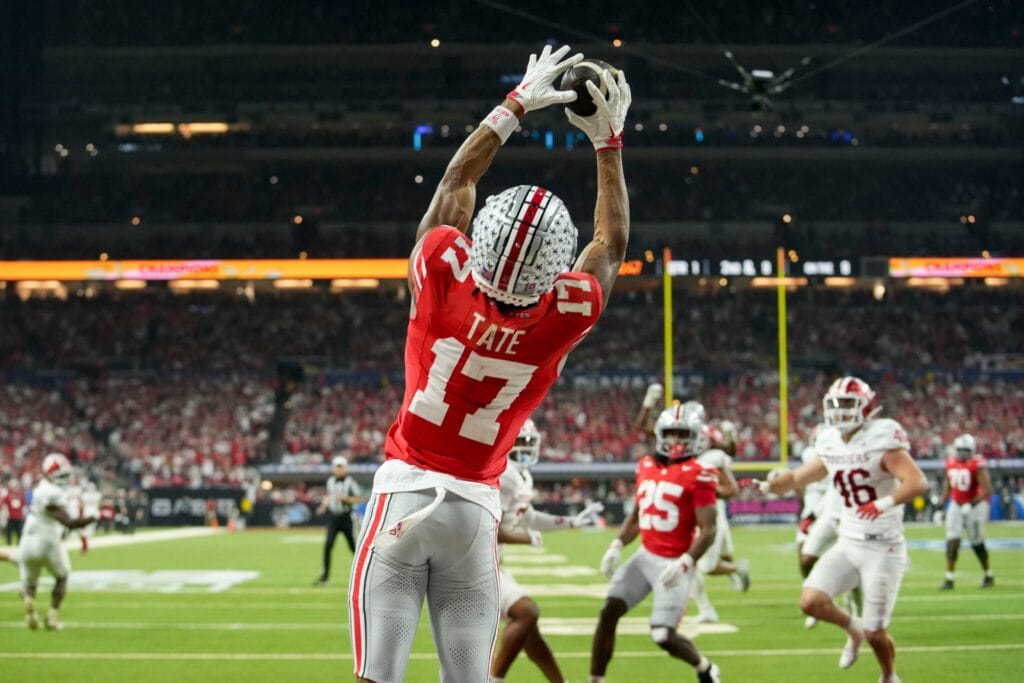
Carnell Tate (Ohio State)
Tate is a pretty easy eval, and of the top names in this class he’s the one I feel best about as far as hitting their ceiling in the NFL. Is the ceiling that of a player we typically see in the Top 10? No. I’m not sure that he’ll ever be a yearly Pro Bowl-level receiver. That said, he checks a ton of boxes and has a skillset that translates well in the league. I don’t think he’ll blow the doors off the combine from a testing perspective, but that’s okay. I’m not expecting him to.
Malachi Fields (Notre Dame)
Fields has great size at a legitimate 6-foot-4 and nearly 220 pounds. He’s played a ton of ball, first at Virginia and then at Notre Dame, after arriving in college as a former high school quarterback. His intangibles are high. He had a good week at the Senior Bowl. There’s a lot of positive momentum here. There’s reports that he could test pretty well, especially for a guy his size, but even if he falls short of some of those expected numbers, I’m not going to ding him too much. He’s got a lot going for him regardless, and I don’t think he has a game that is predicated on top-shelf athleticism.
De’Zhaun Stribling (Ole Miss)
Like Fields, Stribling’s game is not based on speed and quickness. The seasoned sixth-year senior is not a great athlete on tape and lacks explosiveness off the ball. He makes up for that with a natural feel for playing in traffic, reliable hands and tenacious blocking. He probably settles in with a ceiling as a No. 3 pass target, but I feel good about his chances to get there (or close to it).
Most To Prove
Some players make this trip with a big question (or three!) at this stage of the process. How well does he run? Will he pass the medical check? What is he like off the field in the interview room? These are the prospects with the most notable question marks on their resume at this stage of the process.
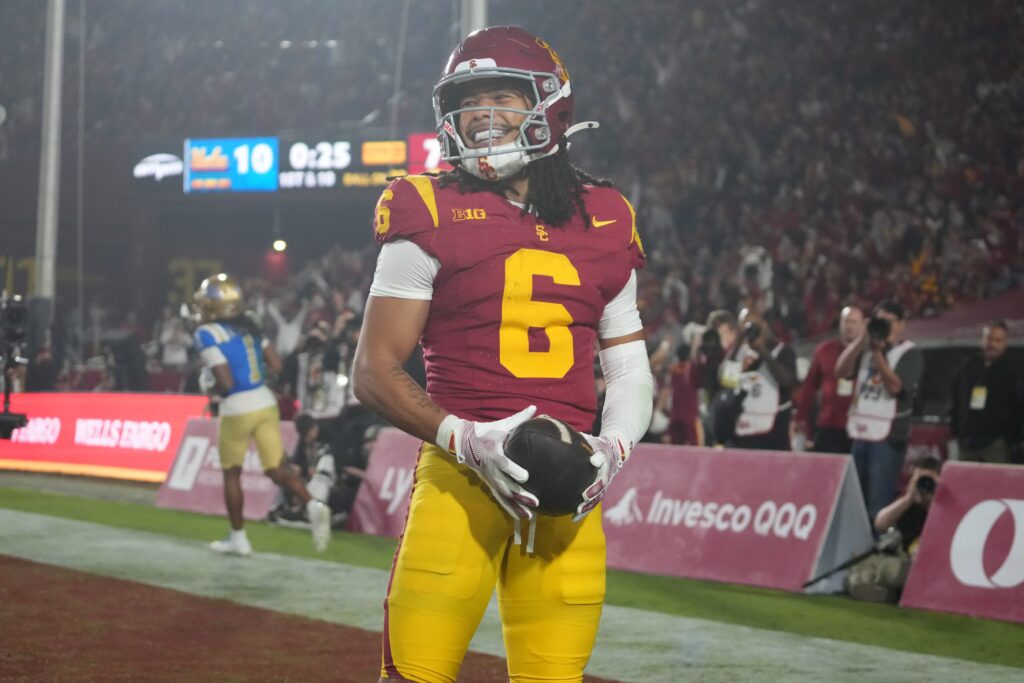
Makai Lemon (USC)
The Biletnikoff Award winner as the top receiver in the country this year, Lemon is listed at 5-foot-11, 195 pounds, but teams want verified size on him, because the film does not show a superior athlete. He can find soft spots in zone coverage but is not an elite separator when left one-on-one. His toughness is outstanding. He catches the ball. He plays through contact. There are things to like. But if if he’s going to go Top 20? He has to test well at his size. It’s a tough sell if he doesn’t.
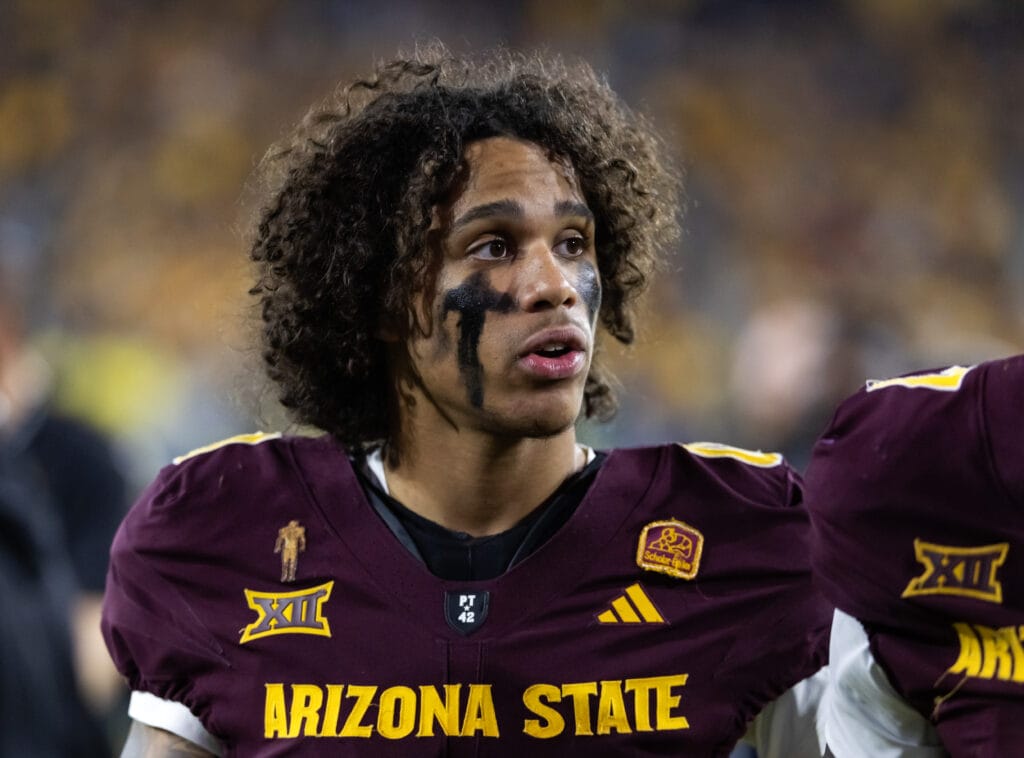
Jordyn Tyson (Arizona State)
Our friend Dane Brugler at the Athletic broke the news on Monday evening that Tyson would not be participating in drills at the Combine as he continues to work back to 100 percent after a late-season hamstring injury. That is not great news, as this is the biggest issue in Tyson’s profile. He suffered a season-ending knee injury in 2022 that cost him most of the 2023 season, did not finish the 2024 campaign due to a collarbone injury, and then dealt with the hammy as the first frost started to set in at the end of the fall. For a player who I don’t believe has overwhelming physical traits and has had historical issues with drops, it’s just not a great red mark on the profile.
Denzel Boston (Washington)
With Boston, the big question is his overall athletic profile. Listed at 6-foot-4 and 209 pounds, he’s a big-bodied pass catcher who profiles as a pure ball winner outside the numbers. Separation? Not necessarily his bag. He’s a guy who may need to get schemed open and in whom quarterbacks will ultimately just have to have faith to go and win in tight quarters. Testing better than expected could make teams feel a bit better about his potential.
KC Concepcion (Texas A&M)
Concepcion is listed at 5-foot-11, 190 pounds by A&M. Teams are inquisitive about the real measurements there and, after that, how he tests at that size. Perhaps more than any of the other top receivers, teams will be laser focused on how he does in position drills as well. One of the knocks on Concepcion has been the frustrating focus drops on tape, if he can get through the workout without putting too many targets on the Lucas Oil turf, that will quell some of those concerns.
Ted Hurst (Georgia State)
Hurst is a proven commodity on jump balls, and at 6-foot-3, 207 pounds with 33-inch arms, it’s a skill that should continue to provide value in the league. Can he be more than that? Can he break 4.50 in the 40-yard dash? Can he look sharper as a route runner? Can he ace the positional work? Those are things that will go a long way for a small school receiver from a bad team looking to get into the Day 2 conversation.
Skyler Bell (UConn)
Bell had a ton of production this year for the Huskies but I’m not sure if he has the physical tools to offset some of the weaknesses of his profile. He has mediocre size at just over 5-foot-11, 187 pounds. He’s not the best route runner you’ll find. I worry about his ability to play through contact. He’s not a great blocker. He doesn’t play special teams. To me, he has to test well this week if he’s going to go as early as Day 2, which is where some have him pegged at this point in the process. I’m not sold.
Chris Bell (Louisville)
This one is purely on the medical side of things, as Bell tore his ACL in late November at the end of the regular season. Teams won’t put his knee through the ringer, but imaging will likely get done just to check the status and stability of the surgically repaired ligament as teams try to get the best intel on his progress coming back from the injury.
The Rest Of The Pack
Everyone else who will take part in the events in Indianapolis (in alphabetical order).
Aaron Anderson (LSU), Vinny Anthony (Wisconsin), Dillon Bell (Georgia), Malik Benson (Oregon), Jeff Caldwell (Cincinnati), Josh Cameron (Baylor), Kevin Coleman JR (Missouri), CJ Daniels (Miami), Caleb Douglas (Texas Tech), Emmanuel Henderson (Memphis), Jordan Hudson (SMU), Caullin Lacy (Louisville), Ja’Kobi Lane (USC), Eric McAlister (TCU), Donaven McCulley (Michigan), Eric Rivers (Georgia Tech), Chase Roberts (BYU), J. Michael Sturdivant (Florida), Zavion Thomas (LSU), Reggie Virgil (Texas Tech), Harrison Wallace III (Ole Miss), Jalen Walthall (Incarnate Word), Kaden Wetjen (Iowa), Antonio Williams (Clemson), Colbie Young (Georgia)
Mr. Average
We get to read all about the measurements for all these players over the next few weeks … but wouldn’t it be nice to have some context? What is considered a ‘good’ 40-yard dash time for this position? What about arm length? The broad jump? Here’s what the average player drafted at each position has looked like over the last decade (by my records).
Height: 6006 (6’0 3/4’’’)
Weight: 201
Hand Size: 938 (9 3/8’’)
Arm Length: 3168 (31 3/4’’)
Wingspan: 7638 (76 3/8’’)
40-Time: 4.46
10-Yard Split: 1.55
3-Cone Drill: 6.96
Short Shuttle: 4.25
Broad Jump: 124’’
Vertical Jump: 36.0’’