
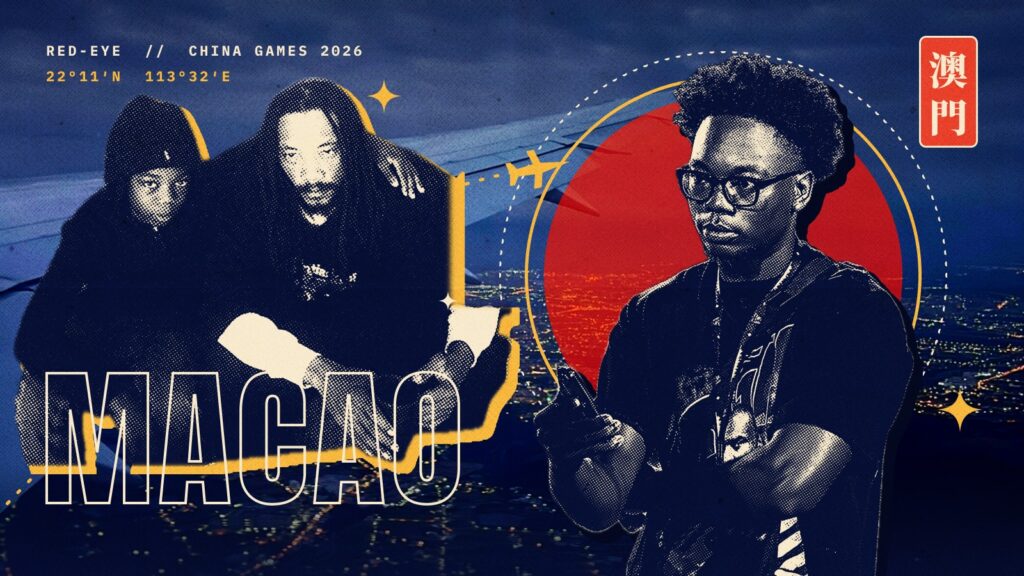
MACAO — It was nearly midnight when I ordered a $46 Uber to Dallas Fort Worth International Airport. The drive took 20 minutes. That’s the price of greatness, I guess.
I stared out the window of the Tesla as my heartbeat quickened. Music only made it worse. At the airport, the line to check my big blue-and-orange suitcase nearly reached the doors, but I cleared TSA with an hour to spare. Then I found my seat and spotted two members of the DLLS Mavericks crew, the podcast that I am a part of, and my anxiousness began to ease.
We were headed to Macao, China to cover two preseason games between the Dallas Mavericks and the Houston Rockets, but the trip meant more to me than basketball. I was about to cross the world to cover an NBA team in a country my father, Ronald Harrod Sr., had never visited. He had never been on an airplane at all. We had never rushed to a gate together or crept through a security line side by side.
When I was a kid, I watched my father play basketball in a D.C. neighborhood called Montana. He was one of the best streetball players around, a 6-foot-1 guy who could pass. I wished I would grow as tall as him. I stopped at 5-foot-10.
My father, who dropped out in the ninth grade, came to most of my high school games. I felt safe when he was there. I looked up to him like a hero.
That safety gave me the confidence to chase things he never could, growing up in Washington in the late 1980s and 1990s.
He is the reason I was on that plane. He gave me my love of basketball, and that love led to my job as DLLS Sports’ Mavericks beat writer.
My family is working class, and we rarely left Washington. Even a drive to Baltimore felt like a big trip when I was a kid. I got to see more of the country because of my grandparents and my aunt in California. My parents, though, have always been most comfortable at home.
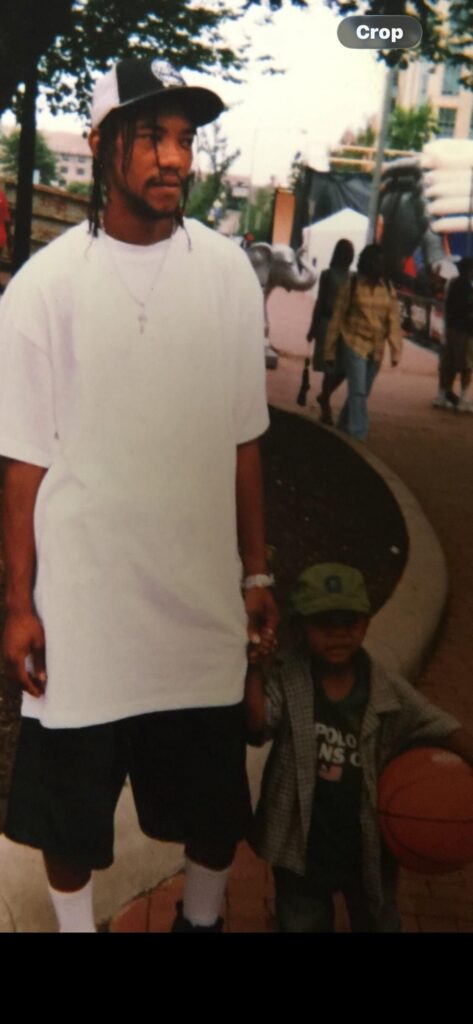
Air travel had become ordinary to me, and I only noticed once I was leaving. For my father, and for most of my immediate family, it had never been part of the equation. Yet here I was, bound for a week in China, doing the work I had dreamed about since college. Even now, it feels surreal.
The plane was the biggest I had ever boarded, with a blanket and headphones waiting on every seat. I settled into an exit row beside a couple celebrating their 10th anniversary, who told me about their upcoming trip to Japan. I was thinking only about the 16 hours to Taipei. We left DFW around 12:15 a.m. and were served chicken, rice and broccoli an hour later. Thirty minutes after that came black tea and coffee. It was 2 a.m. Several passengers accepted gladly. I slept for five hours, then in fragments and finished Netflix’s “A Different World” because I was too tired for anything else.
In Taipei, I reunited with my three co-hosts and The Athletic’s Christian Clark, who would travel with us the rest of the way. During a four-hour layover we found a Taiwanese chicken restaurant. The chicken was noticeably less greasy than what I was used to at home.
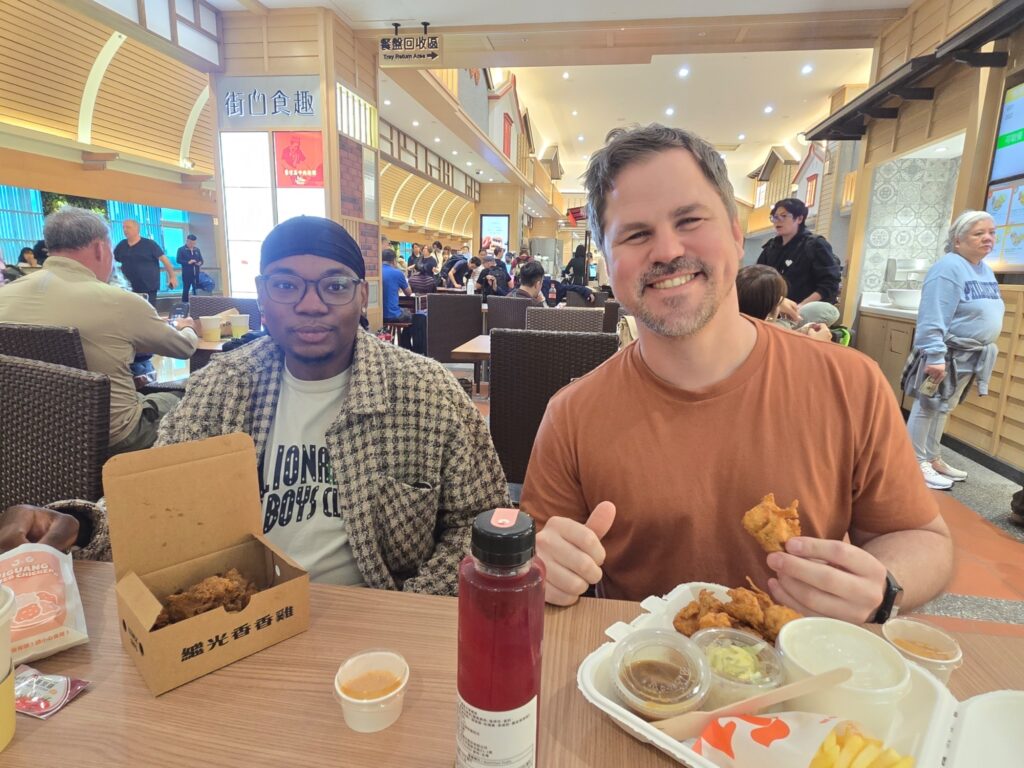
The final flight, under two hours, felt easy after what we had endured. Then we ordered an Uber to the Grand Dragon Hotel, where we stayed, for about $5 a person.
Gold dragons crowded the hotel’s facade. My room had enormous lighted vanity mirrors and a view of apartment towers running to the horizon. We had skipped the Las Vegas-style strip where the Mavericks would play and stay, and the choice put us closer to the daily life of Macao. Restaurants displayed live lobsters and huge fish in tanks for customers to choose from, and roasted ducks hung in windows. Some of the apartment complexes climbed past 30 stories and covered entire city blocks.
At about 5:30 p.m. we went to The Parisian to inspect the room where we’d host our livestreams. The lobby smelled so strongly of expensive perfume that it felt like walking into a department store. Our studio had a gorgeous painting to serve as the podcast backdrop. After setting up, we ate downstairs. My shrimp fried rice was the lightest I’d ever had, as if it hadn’t touched oil, and it made me wonder what we’d been eating back home.
Back at the hotel by 10 p.m., I woke at 2 a.m. It was 1 p.m. in Dallas, and the 13-hour difference had scrambled my body. I tossed for two more hours before sleeping again.
The business of basketball
I woke near 7 a.m. to sunlight through the blinds. The room had blackout curtains, which I wouldn’t discover until my third day.
At 8:45 we took an Uber to The Venetian, where the NBA had turned part of the property into a showcase for its China games. Neon signs, hanging jerseys and interactive player displays filled the space, some of it so advanced I couldn’t tell how it was built. I could have wandered for hours, but we hadn’t come to admire the displays.
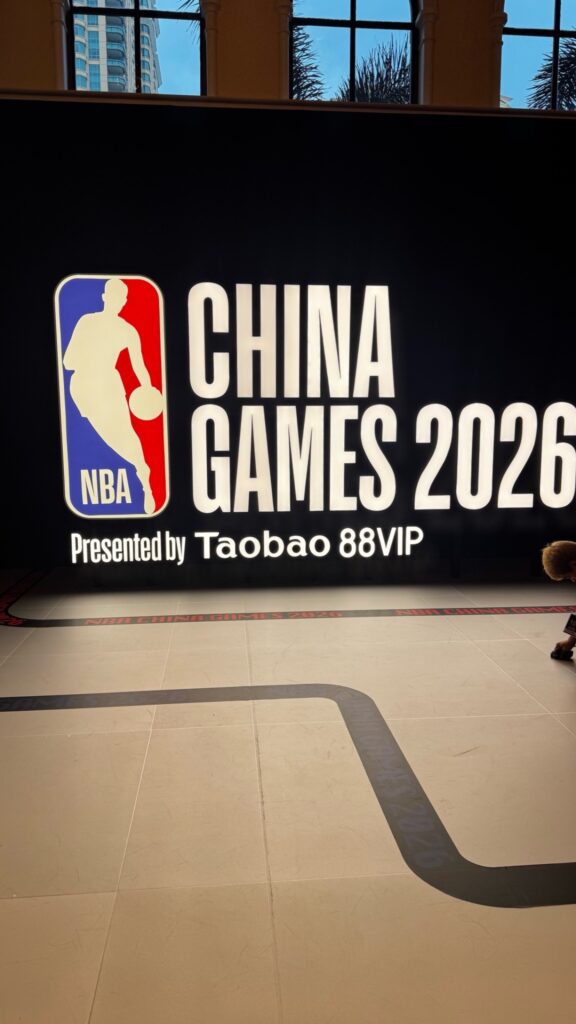
Media day drew roughly 400 journalists from around the world. Four interview stations rotated Mavericks players in 10-minute intervals, so our crew split up to cover as many as possible. I talked with P.J. Washington, Naji Marshall and Zaccharie Risacher.
The crowd belonged to Kyrie Irving, a megastar in China thanks in part to his ANTA endorsement deal. At least 100 reporters pressed around his station as he discussed his recovery and his hopes for Dallas. He also revealed a setback in his recovery from last season’s ACL tear that pushed his timeline back nearly two months. News of the Grade 2 calf strain had never left the Mavericks’ building last season.
It was a significant development, and we had a show to prepare. Back at The Parisian, we recorded a 90-minute livestream, one of our longest since I joined the crew, with a guest appearance from David Godsey. By the time we returned to the hotel around 9 p.m., the jet lag was winning. I hit the cold bed and was gone.
The first game
On Oct. 9, the excitement was visible the moment we entered The Venetian. Fans filled the lobby in Irving and Cooper Flagg jerseys. That surprised me, given the enormous Rockets following in China, rooted in the legacies of Yao Ming and Jeremy Lin.
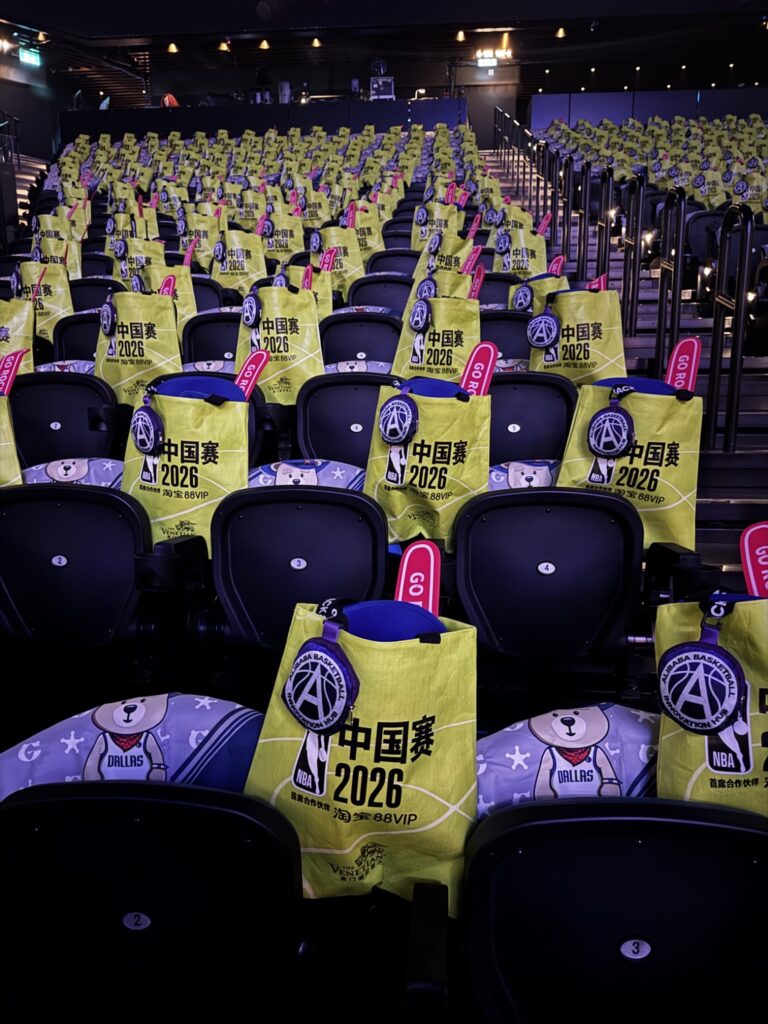
Before the game, Mavericks owner Patrick Dumont led a tour of The Venetian Arena. Since becoming operating owner in November 2023, Dumont has rarely granted interviews, leaving the talking to Masai Ujiri and Rick Welts, the team’s top basketball and business executives. This time, he walked roughly 25 reporters and team employees through nearly every corner of the building, pointing out the renovations Sands Corp. had made, including new VIP suites and pregame and postgame lounges. Many spaces carried a red, white and blue theme that mirrored the NBA’s branding in China. The renovations wouldn’t be replicated exactly in Dallas, Dumont said, but he was confident the team would borrow the best elements for its future arena: the surround sound, the movie-set lighting, the character of the lounges.
Then it was back to work. Before tipoff, Irving was ruled out. A visible sigh moved through the international media at the news conference. Many had come hoping to see the star guard, and fans had hoped to watch him play with Flagg for the first time.
Inside the packed arena, fans wore jerseys and cowboy hats in support of the Texas teams. Yao, Shawn Marion and Lin were among the former stars in attendance. The in-arena host could have worked in any American building, trading jokes and crowd-engagement bits in English and Chinese. The video board looked smaller than those back home, but the atmosphere felt familiar, right down to a halftime show I couldn’t follow in the local language. Flagg scored 19 points. The Rockets won 135-117.
After the postgame news conference, where fans in the room asked entertaining questions, the session ran long. With a 13-hour gap between Macao and Dallas, we wanted to start our show, so I left early for the studio. A security guard stopped me to ask whether I was sure I wanted to miss Kevin Durant’s news conference. I laughed and kept walking. I had seen that scene before. We recorded another 90-minute show and fell into bed.
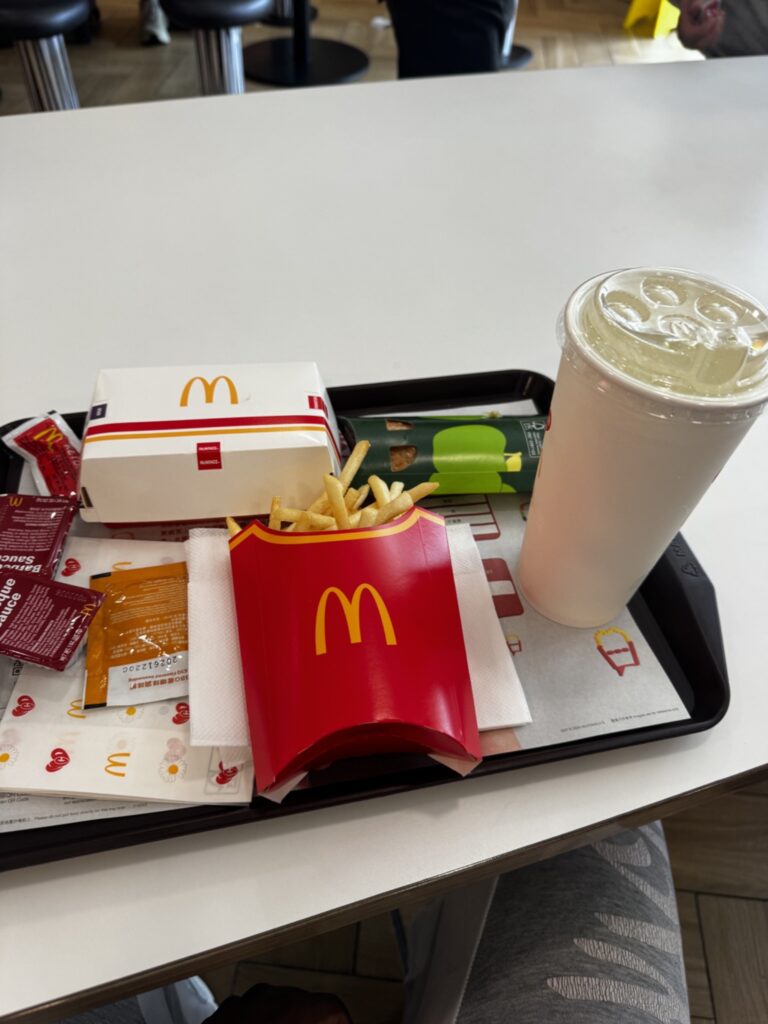
The next morning I did the most American thing possible and went looking for McDonald’s. After several days of unfamiliar food, including eel, I wanted something I recognized. The nearest one was a block from our hotel, as if it were meant to be. I ordered a large fry, nuggets with honey barbecue sauce, a lemonade and an apple pie. The nuggets tasted different, maybe because of the oil. The apple pie took me back to 2005 in the best way. It was one of my favorite meals of the trip.
None of the food was bad, to be fair, but nothing blew me away either. I missed the seasoning I grew up with, especially the way African American cooking builds flavor into the meat itself rather than relying on sauce. In our culture, we use ingredients such as onion powder, garlic powder and a blend of spices to bring out the flavor in a dish.
The first night of the trip, I ordered shrimp fried rice, a staple in many lower-income neighborhoods back home. But the shrimp tasted different, and the fried rice was noticeably lighter. It was almost as if they hadn’t used any oil. The shrimp also had a softer texture than what I was used to eating in the United States.
I also stopped eating pork during my sophomore year at Radford University and have stuck with it ever since. But one challenge with cutting something out of your diet is finding alternatives, and that became difficult in China. Many of the dishes we were served contained some form of pork. Every dumpling we came across seemed to have pork in it, which kept me from trying them. Even some of the snacks were pork-based. If I had to guess, I probably ate pork without even realizing it.
That night, after dinner at a local restaurant, the crew headed to a late-night bar. The beer was so good and so cheap that I felt like I was living in the glorious 1990s the old heads always talk about. We swapped stories, listened to music and walked the block back to the hotel. I was pretty tipsy by the time I hit the bed.
One last game
I woke up in surprisingly good shape on our last full day in China, and we wanted to finish strong. At The Venetian we grabbed lunch and talked with other journalists, including Clark, ESPN’s Brian Windhorst and Tim MacMahon.
When Mavericks coach Dusty May announced that Irving would make his debut, a warm feeling crept in the room. Nearly every question was about him.
Irving walked onto the court to Dallas rapper BigXthaPlug and waved to the crowd. No. 11 jerseys dotted the arena. Early on, he hit a buzzer-beating 3-pointer that sent the building into a frenzy, and later he rose over 6-foot-10 Rockets forward Jabari Smith Jr. for a jumper. He finished with 17 points, and Dallas earned its first win of the preseason. Afterward, he talked about what it meant to play alongside Flagg and to return to the court.
We recorded our final livestream an hour after the game and went back to the hotel exhausted. We still had an early departure ahead of us, with a 9 a.m. checkout.
Back to Dallas
I woke early again, still out of sync with the clock, but this time I stayed in bed and thought about the journey as a whole.
In my immediate family, only my aunt had been to Asia. No one had been to China. My mother had traveled across the United States but had never left the country and rarely strayed far from our native Washington, D.C. Yet my family had supported me every step of the way, even if traveling more than 8,000 miles wasn’t something they would have been comfortable doing themselves.
But my family’s travel experiences had helped broaden my own perspective long before this trip. My grandmother and aunt had visited Morocco, and my aunt had even lived in Europe. When I was in high school, she took me to Cuba for a week, where we stayed with a host family. My grandmother, mother and I had also traveled to Hawaii. Those experiences, both across the United States and around the world, helped prepare me for a trip to China before I even knew my job would take me there.
After a short flight to Taipei and another four-hour layover, I returned to the same Taiwanese chicken restaurant. Then we boarded an EVA Air flight to Dallas. No one sat next to me in my exit row, and I put my bag in the empty seat and stretched out. The 13 hours passed quickly.
Two days later, I was back at American Airlines Center covering another Mavericks game. The grind doesn’t stop, even after you’ve traveled halfway around the world.
But somewhere between the $46 Uber, the 2 a.m. coffee, the unfamiliar food and the roaring Venetian Arena, I realized this was bigger than a preseason assignment. I was on the other side of the world, doing the job Dr. Tiesha Martin and Dr. Kevin Ayers first put in my head at Radford University.
I went to China before my father had ever been on a plane. And I came home with a story I never imagined I’d get to tell.
One day, when I have kids of my own, I want to hand them something to build on. Many Black families have had that kind of progress interrupted by the trauma the community has faced. I’m trying to show my future children what’s possible when you have the right support.