© 2026 ALLCITY Network Inc.
All rights reserved.



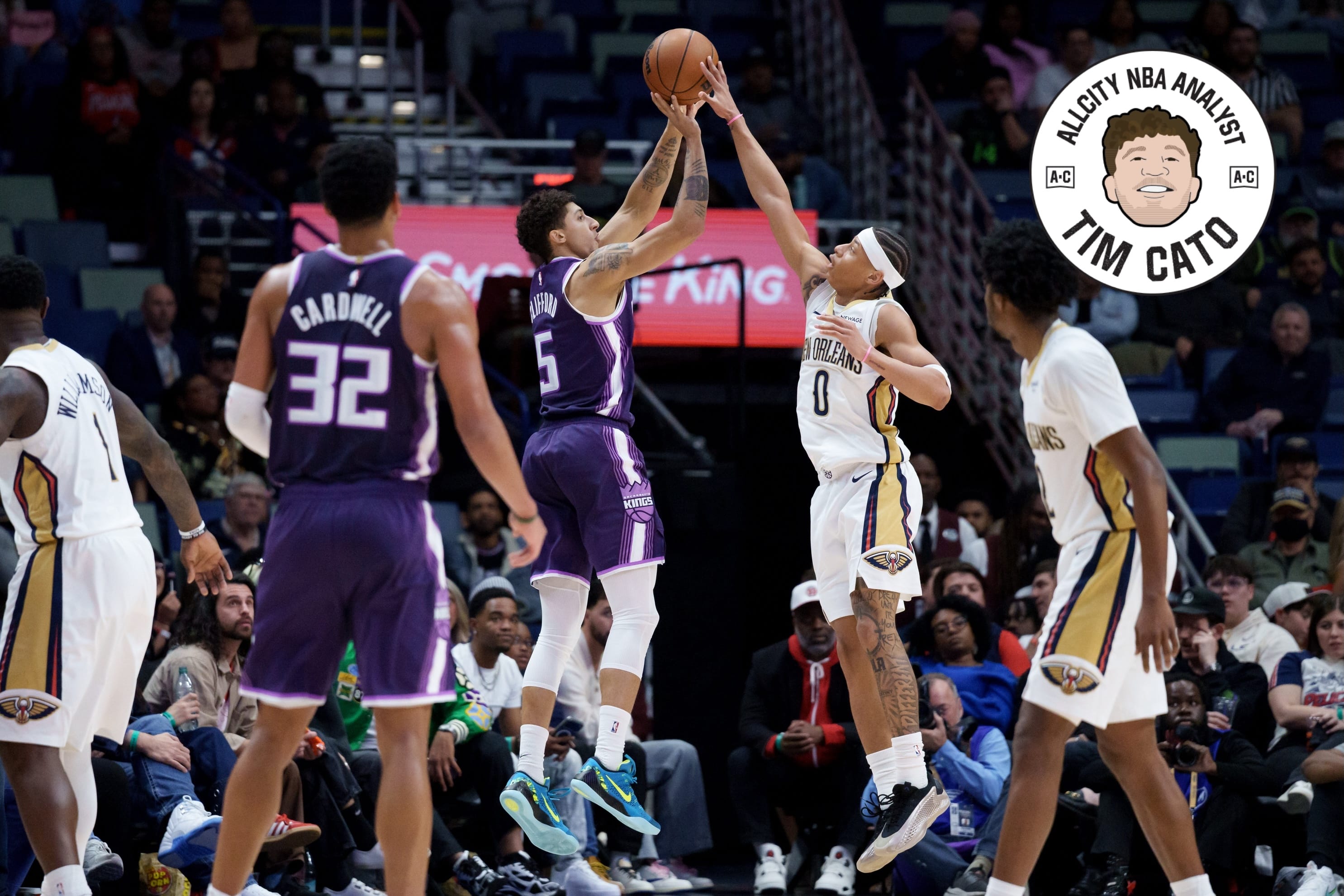
The NBA believes that tanking teams stain its product. That’s not inaccurate: It’s bad for the viewing product when teams don’t play stars; it’s bad for fanbases when games aren’t competitive. However, despite attempts to fix this, the league’s rules still incentivize losing as a team-building vehicle. Last week, the league fined two franchises for what they perceived to be tanking violations. Proposals to fix the league’s current structure have rattled around this sport’s online spaces. This is an attempt to put all of those ideas — both good and bad — into one place to briefly examine why they would and wouldn’t make sense.
PERIPHERAL REFORMS
Restrict pick protections: The Chicago Bulls and the Utah Jazz both lose their first-round pick this summer if it falls outside of the first eight selections. The Portland Trail Blazers have another perverse incentive: If they make the playoffs, which they’re expected to have a chance to do through the Play-In Tournament, their draft slot goes to the Chicago Bulls. This sets up anti-competitive incentives especially for a team like Utah, which isn’t quite talented enough to be a postseason team but would easily climb past dreadful rosters around them without manipulating lineups, as they’ve been doing, resulting in the franchise’s recent $500,000 fine from the league office.
It seems likely the NBA will make this tweak: Under the current system, allowing pick protections only for the top-four or top-14 would be the most sensible change. It won’t fix the incentives to lose for better lottery odds, but much of the most recently maligned behavior has stemmed from these clauses.

Kill restricted free agency: If the lottery odds were changed to once again favor teams with the league’s worst records, one counterpunch could be for the league to agree to eliminate restricted free agency at the next collective bargaining agreement. (The players would certainly support that.) Franchises could still hold homegrown rights to sign these players for more money, but it would reopen the market for players who want to leave, incentivizing teams to draft prospects and then build around them quicker. This hasn’t been a massive issue; most teams do retool from the moment they draft a franchise-altering star. This might be worth more discussion paired alongside other, more meaningful revisions. But it would reduce the power of the draft if an eight-year commitment turned into four.
Shorten the schedule: Teams most often tank on the second night of back-to-backs. The league should shorten its season; there are countless reasons for it, and the current collapse of regional sports networks has created this perfect opportunity to consider it, something the league has shown no interest in. This isn’t a direct fix for tanking, but it would have beneficial trickle-down effects. When games are played between rested players, the results tend to be less random and more reflective of the teams’ talent.
TWEAK THE CURRENT SYSTEM (6)
Worst teams can’t rise: When the league flattened the lottery odds in 2018, it took away the incentive to be the league’s worst team. It didn’t take away the incentive to be bad, however, which meant that teams near the bottom have had no reason to try to be better. These frozen standing proposals could encourage winning. There’s another proposal that might do that organically: What if the league’s worst team, or three worst teams, were removed from the lottery completely?
Don't like ads?
Those teams wouldn’t lose their picks. The lottery would be conducted by the teams that finished fourth to 14th, and the lucky ones would take the top-three selections. Following them, the three teams with the league’s worst records would draft fourth, fifth, and sixth. Under this proposal, bad teams can still be bad. There will always be bad teams; there’s nothing that can be done about that. But where the flattened odds were meant to remove the incentives to be the worst, this modification would create incentives to avoid that. Perhaps franchises would still tank, just more delicately, but aiming to be the fourth-worst team is a lot harder, and does require some wins, than bottoming out as a bottom-three team.
Can’t imagine it? You actually can. The first three picks went to the 11th-worst, eighth-worst, and fifth-worst teams, respectively. One draft prior, the worst team drafted fifth and the third-worst team drafted sixth. The current system still provides better odds for those bottom-three teams. It doesn’t have to. And when there’s a new generational star coming into the league, why would the league want that player to go to a roster that was entirely uncompetitive last season? This punishes those teams, of course, but they’ll still have a top-six pick to be more competitive next season and make sure they aren’t one of the league’s three worst squads.
No lottery repeaters: There are some within the league who have proposed banning teams from drafting within the top-three in consecutive years, which could be extended to also prevent teams from two top-three picks in any three-year span. I don’t think this is a terribly functional proposal. It doesn’t account for bad drafts. It doesn’t account for the fact that banning bad teams from getting high draft picks only increases the odds that the better teams secure them. It incentivizes gap years, like the Indiana Pacers’, who would know that the Washington Wizards and the Brooklyn Nets, both rewarded with top-three picks in 2024, aren’t even eligible for these picks. (Brooklyn owed that pick to the Houston Rockets, but that would theoretically fall under this proposal.) But it’s one idea that’s out there.
Repeal the flattened odds: Does the league care more about the quantity or the quality of tanking? Some team were encouraged by the old system to be horrifically bad, headlined by Sam Hinkie’s 76ers, which led to the initial lottery reforms. Back then, it was a two-to-four-team suckfest. It wasn’t great, but it hadn’t affected the entire lottery, which these flattened odds have done. Teams are no longer tanking across multiple seasons like Philadelphia did: Utah and Washington both traded for veteran players intending to be more competitive next season; the Brooklyn Nets didn’t even move Michael Porter Jr. at this year’s deadline. Since the league insisted that previous version of tanking was so horrific that it had to change, however, it’s unlikely to reconsider just going back to what we had.
Return to a flat lottery: When the league introduced the draft lottery in 1985, every non-playoff team had equal odds at every pick. But fringe playoff teams would now be heavily incentivized to tank. It would just move tanking from the league’s dregs to teams that probably have more star-studded rosters. I don’t think anyone’s proposing this seriously. It’s just worth noting these used to be the league’s rules.
Repeal the reverse order: The best teams should be rewarded, not the worst ones, goes this line of logic. The champions drafting No. 1 echoes how most things in our world are structured. The NBA has never been a meritocracy, however, which means this change obviously won’t happen.
Don't like ads?
Base it off the past five years: This proposal sounds great, basing draft order off multiple seasons rather than just one, which disincentivizes tanking any single season and truly awards the league’s worst teams with the best new prospects. Except the teams currently bottom-five over the past five seasons are: Washington, Charlotte, Detroit, Portland, and San Antonio, in that order. San Antonio, specifically, illustrates the competitive imbalance this proposal could cause: Teams with several bad seasons before drafting someone generational like Victor Wembanyama, who can quickly turn their team back into contenders, would still profit from those dark years before he arrived. Likewise, teams that finally blow up veteran cores, consistent with the league’s lifecycle, would be punished for being good in the past. It could also encourage again what the league first set out to solve: Teams like the 76ers who commit to multi-year tanks as a strategy.
It would add more nuance to trading draft picks, however, which is similar to …
Reform to The Wheel: In 2013, Zach Lowe wrote extensively about Celtics executive Mike Zarren’s idea, named The Wheel, that would abolish the draft as we know it. While there would still be a draft, every team would receive every selection over a 30-year period. Every team would be guaranteed a top-six selection every five years; every team would have a top-12 pick every four seasons. There’s a good chance you’ve heard of this proposal. I won’t crib too much from Lowe’s piece, which lays out the idea with more detail than this story’s intended for. It’s a fascinating reimagining of a process; it’s meritocratic. But we’ve already established that’s not what this league prioritizes. I don’t think even Zarren thinks this idea will, or must, happen, and it won’t. But no idea invokes more joy than this.
FREEZE THE STANDINGS
We know the league has considered proposals that still use the standings to determine draft order but freeze at a certain point in time. Here are four different options how that could work.
Freeze at a known date: The standings are locked on March 1, let’s say, which determines the draft order. (Or perhaps just the league’s lottery odds as before.) The intention would be increasing competition in the season’s final weeks, which has increasingly become a shameless time for bad teams to avoid playing anyone who can help them win. But teams have been tanking this season since January. It’s hard to imagine this would do anything but speed up that process. Also, you’d need to tweak the schedule so that every team has the same number of games on that date, which is doable but prone to confusion should games be rescheduled.
Freeze at an unknown date: It’s not March 1, actually, but February 12. But teams won’t know that until that date’s reached, and the league announces it, is how another proposal goes. And we’d have the same issue as above, I’m thinking, which does little to solve the problem that teams can still enter seasons aiming not to win and be rewarded for it.
Don't like ads?
Freeze and reward teams for wins: Let’s say that, after March 1, wins became losses for non-playoff teams. Last season on that date, the Atlanta Hawks, who finished with the league’s 14th-worst record, had a 26-30 record while the Washington Wizards, who finished last, were 14-39. The Hawks won 14 more games, which would bring their combined loss-win total to 44. Washington won just three. Adding that to the team’s pre-freeze defeats, Atlanta would have actually finished ahead of Washington in these revised standings. (And, it turned out, that ended up being true for the actual draft, too.) But what would have changed if, on that March 1 date, the Wizards actually now had incentives to win?
I fear it’s a messy proposal that would need countless addendums and would be incredibly prone to being hijacked by the right team in the right year. It obviously has enormous strength-of-schedule problems that would have to be addressed. Perhaps wins would only count against other non-playoff teams? But the league couldn’t script that into the schedule without creating some sort of tournament that guarantees these teams play each other evenly. (We know Adam Silver loves tournaments, though.) This would hurt teams really trying to win before significant midseason injuries. It would encourage tanking to happen earlier, too, just shuffling around when the most egregious tanking examples happen on the calendar. Perhaps wins could count differently against different types of teams. Once we involve algorithms, though, I’m fully done with this idea.
DRAFT ABOLISHMENT
The draft has been abolished. Our new basketball boys will no longer be enlisted and shipped out to cities they’ve never even heard of. This one has two schools of thought.
Reform to free-for-all agency: If players could sign where they want, the true ramifications would be the return of free agency as a serious team-building tool. We know the league’s superstars rarely, if ever, reach free agency. The few stars that do tend to be past-their-prime veterans like Paul George. Cap space has turned into a tool for front offices to rebuild and for middling teams to sign role players. If every prospect was an unrestricted free agent every season, that would quickly change.
The Boston Celtics still wouldn’t have been able to sign Cooper Flagg last season unless he took a serious discount. Would he? Would young prospects, albeit ones that have made money due to college basketball’s NIL reforms, still want to be paid. To become superstars, the path to their highest earning potentials, they need minutes and a role that makes sense. Sometimes, one of the league’s best teams would convince one of the league’s best prospects to join them. That’s a reality that has to be acknowledged under this proposal. But how dramatically teams would shape their cap sheets around incoming prospects is hard to predict.
I don’t think this would create a pipeline where the best prospects always go to the best teams. I do think this would hurt small market teams. But it would also demand more from them, asking them to build a project that young players believe in and can see themselves fitting into. San Antonio would be fine while Sacramento and New Orleans would need to rethink their organizations from top to bottom. That’s if there are no guardrails, at least. To the extent this idea makes sense, I think guardrails would be necessary, such as …
Don't like ads?
Reform to salary slots: Rookies are free agents, and they can sign with any team. But teams are restricted in how much they can offer them thanks to a salary structure that resembles the league’s current NBA rookie scale, which is determined by the standings.
Bad teams would still benefit from having more money to sign rookies. In 2025, the No. 1 draft pick could be signed to deal worth $62.7 million over four years; the No. 5 pick was eligible for $41.2 million; the No. 20 pick could receive $17.7 million; the No. 30 pick received just $14.1 million. Keeping this exact structure, would Cooper Flagg have passed up $6 million to join the San Antonio Spurs instead of the Dallas Mavericks? It’s possible. That wouldn’t happen under this proposal — there would be no need for a lottery, and those teams wouldn’t have jumped up — but it’s useful to examine real world implications. If Flagg made that choice, Harper probably would have chosen Dallas, who had the most money to offer him and an immediate need to fill. Perhaps, eventually, some prospect would choose to join the league’s best team and lose nearly $50 million in the process. But the Indiana Pacers may still end up with a top-four pick under the system that exists right now. It’s not like this has never happened.
Perhaps that spending power for each draft slot could be pooled year-to-year. That would help account for bad drafts. Perhaps teams with higher salary slots would split that money into two or three rookie contracts, akin to teams trading down, if the league’s best prospects ignore them. If Sacramento and Washington finish this season with the league’s two worst records, as they are currently, Darryn Peterson could turn down the additional $6 million that the Kings could offer him to choose the Wizards if he believed them to a better run franchise. That brings back the incentive that teams have to have competent rosters to pitch to these players.
The NBA isn’t likely to consider it, much less implement it, which would take years to happen even if they were inclined to. There’s no simple solution to account for future draft picks that have been traded. But if the NBA wanted to ask more from its franchises, this would be one of the most equitable ways to solve this problem. It would functionally disconnect losing from the guarantee of a superstar prospect. Perhaps too much, but it certainly would.
MAKE LOTTERY REFORM A LOTTERY
My last proposal: Just throw all these ideas into a ping pong machine this May and choose whichever ones come out. Maybe it’ll be better than what we have now.
Comments
Share your thoughts
Join the conversation

The Comment section is only for diehard members
Scroll to next article

Don't like ads?
Don't like ads?
